AWAKENING & TRANSFORMATION
Something in me is changing
Maybe your priorities feel different. Maybe old relationships, ambitions or identities no longer fit the way they once did. You do not need to label the experience immediately. Begin by noticing what is changing—and what it may be asking of you.

Awakenings rarely arrive as lightning bolts. More often they show up as a quiet unease — old friendships that suddenly feel like ill-fitting clothes, a job that stopped meaning anything, a sense that the person you’ve been performing isn’t quite who you are underneath.
Nothing is wrong with you. What follows is a set of starting points to awakening & transformation.
“The self you’ve outgrown doesn’t disappear all at once. It just gets quieter, room by room.”
Start Here
Change can feel disorienting before it feels meaningful.
Profound inner shifts can arise during spiritual awakening, life transitions, grief, stress, psychological growth or periods of deep questioning. This page helps you explore the experience without forcing a conclusion.
01 / notice
Old goals feel strangely empty
Your definition of success may be changing.
A question to sit with ↓ (click here)
What would success look like if nobody else had to approve of it?
Goals that once motivated you can start to feel strangely empty. The promotion, bigger home, recognition, or carefully planned milestone may still look desirable, yet no longer feel worth the sacrifices required. This can be unsettling when you have spent years working toward them. You might wonder whether you have lost your ambition—or whether you are beginning to question whose expectations your ambition has been serving.
Your definition of success may be changing. Perhaps achievement once meant security, belonging, or proof that you were doing life correctly. Now you may want more time, meaningful work, honest relationships, creative freedom, or a pace you can sustain. Ask yourself: What would success look like if nobody else had to approve of it? Notice which answers bring interest or relief, and which sound like another standard you feel obliged to meet.
You do not need to abandon your responsibilities or make dramatic changes to explore this. Begin with one adjustment: protect an evening, reconsider a commitment, or pursue something valuable without turning it into an accomplishment. Old goals can also feel empty during exhaustion or disappointment, so give yourself time before drawing conclusions. Let your next steps reflect what matters to you now.
02 / notice
Relationships feel different
You may crave depth, honesty or more solitude.
A question to sit with ↓ (click here)
Where do you feel most able to be honest about what is changing?
Relationships can feel different when your beliefs, priorities, or sense of yourself begin to change. Conversations you once enjoyed may leave you wanting something deeper. You might feel less willing to agree for the sake of harmony, or need more quiet time to understand your own thoughts. This can bring relief alongside sadness, especially when familiar ways of connecting no longer feel natural.
These shifts deserve attention without assuming that every uncomfortable relationship has run its course. People who care about you may need time to understand what is changing. You may also need practice expressing yourself clearly: “I’m still working out what I believe, and it helps when I can talk without having to defend a conclusion.”
Ask yourself: Where do I feel most able to be honest about what is changing? Notice who listens with curiosity, respects your boundaries, and allows disagreement without withdrawing affection. Consider whether you offer that same openness in return.
Solitude can give you room to reflect, while connection offers companionship and perspective. Explore a balance that supports you. You can share selectively, ask for space, and build deeper conversations gradually. Let relationships evolve through honest exchanges rather than expecting everyone to change alongside you.
03 / notice
You feel unusually sensitive
Emotion, noise or social demands may hit harder.
A question to sit with ↓ (click here)
What could you make a little quieter or simpler today?
Some days, everything seems to reach you more intensely. A busy room feels overwhelming, an ordinary conversation leaves you drained, or a small disappointment brings unexpected tears. When you are questioning beliefs or navigating change, you may also have less room for noise, emotional demands, and other people’s expectations. You do not need to assign this a spiritual meaning to take your experience seriously.
Begin by noticing what feels hardest and when. Is it constant conversation, crowded spaces, upsetting content, or the pressure to respond immediately? Consider everyday factors too: how much rest you have had, what you are carrying emotionally, and whether you have had any time without demands. Sensitivity can be a reason to adjust your pace while you understand what is happening.
Ask yourself: What could I make a little quieter or simpler today? You might silence notifications, shorten a visit, leave one task unfinished, or explain that you need a quiet evening. Choose something small enough to be realistic.
You can care about others while recognising your limits. Give yourself permission to pause before agreeing, recover after demanding situations, and seek company where you feel comfortable being yourself. You do not have to explain everything today.
04 / notice
You keep asking bigger questions
Meaning, identity and purpose move to the foreground.
A question to sit with ↓ (click here)
Which question feels worth staying with, even without an answer?
Questions that once stayed in the background can begin to shape your days: Who am I beyond my roles? What makes a life meaningful? Which beliefs still feel honest? You may find yourself reconsidering choices you previously took for granted, from how you spend your time to what you hope your life contributes. Familiar answers might offer less reassurance, while new ones remain difficult to name.
These questions can arise through change, loss, curiosity, or the gradual recognition that your priorities are shifting. You can explore them without treating every uncertainty as a problem requiring an immediate solution. Some questions become clearer through ordinary experience: caring for someone, making something, keeping a commitment, or noticing when you feel most engaged.
Ask yourself: Which question feels worth staying with, even without an answer? Choose one and give it gentle attention. Write about it, discuss it with someone who listens well, or notice how it appears in your daily choices. Leave room for your understanding to evolve.
If reflection becomes repetitive or exhausting, pause and return to something concrete. Eat, walk, rest, or connect with someone. Exploring meaning can sit alongside living your life; you can take the next step while remaining uncertain.
An orientation, not a destination
A gentle map of what may be happening
Not a diagnosis. Not a rigid sequence. Just four useful ways to orient yourself.
01
Notice
Name what has changed without trying to explain it yet.
Notice changes before assigning meaning. ↓ (click here)
When something shifts within you, it is natural to search for an explanation. You may wonder whether you are experiencing spiritual change, outgrowing familiar beliefs, or simply needing rest. Before choosing a story, give yourself a moment to notice what is actually different.
Be specific. Instead of “My whole life feels wrong,” try “The work I used to enjoy feels less satisfying.” Instead of “I’m becoming disconnected,” you might say, “I want more time alone, and I’m unsure how to explain that to people.” These observations give you something concrete to explore without deciding what the change means.
Notice when the feeling appears, how long it lasts, and what makes it stronger or softer. Include what remains steady: relationships you value, activities you enjoy, responsibilities you care about. A changing experience rarely tells the whole story of your life.
You could write three sentences: “I’ve noticed…” “This feels…” “I’m still unsure about…” Keep the language simple and leave room for mixed feelings.
You can return to explanations later. For now, naming your experience may help you respond more thoughtfully: asking for space, having a conversation, or adjusting an expectation. Let understanding develop from careful attention, with permission to revise your impressions.
02
Understand
Explore awakening, transition, identity and nervous-system stress.
Understanding begins with exploring ↓ (click here)
Once you have noticed what is changing, understanding begins with exploring several possible explanations. Spiritual awakening may be one framework you find meaningful, especially if you are questioning familiar assumptions or experiencing a different sense of connection. Hold that framework with curiosity while considering the circumstances of your life.
Transitions such as bereavement, changing relationships, parenthood, or a new stage of life can also unsettle what once felt certain. Your identity may be shifting as roles, ambitions, or inherited beliefs become less convincing. You might need time to discover which values still feel like yours and how to express them.
Consider stress, too. Notice whether you feel constantly on guard, easily overwhelmed, restless, or depleted. These experiences deserve attention without assuming they reveal a particular spiritual process. Ask what demands you are carrying, what helps you settle, and whether your everyday needs are being met.
These perspectives can overlap. You can explore spiritual meaning while acknowledging emotional strain and practical pressures. Read thoughtfully, speak with people who welcome uncertainty, and consider qualified support when distress persists or disrupts daily life. Understanding develops as you gather context, test interpretations, and learn what helps you live with greater steadiness, honesty, and connection.
03
Stabilize
Protect sleep, routine, grounding and supportive relationships.
Stablize through selfcare. ↓ (click here)
When your beliefs or sense of identity are shifting, familiar routines can give you something dependable to return to. Stabilizing means tending to the everyday conditions that help you feel steady enough to explore what is happening. You can make space for uncertainty while continuing to care for yourself.
Protect time for sleep and aim for a reasonably consistent rhythm of waking, eating, working, and resting. Keep expectations manageable. A simple meal, a short walk, or one completed household task can provide a useful sense of continuity when your thoughts feel unsettled.
Grounding can be equally ordinary: feel your feet against the floor, notice the sounds around you, or describe a few things you can see. Choose what feels comfortable and helps you reconnect with your surroundings. If a spiritual practice leaves you more overwhelmed, give yourself permission to shorten it or pause.
Stay connected with people who listen without rushing to explain your experience. You might say, “I’m going through some changes. Could we spend time together without needing to figure everything out?”
Let stability be something you build through small, repeatable acts of care. You do not have to resolve your biggest questions before making today feel more manageable.
04
Integrate
Let insight gradually reshape how you actually live.
Let insight shape everyday choices. ↓ (click here)
An insight can feel clear in a quiet moment, then become harder to follow when ordinary life resumes. You may recognise that you need stronger boundaries, value different things, or no longer believe something you once accepted. Integration begins as you explore what that understanding asks of you in everyday situations.
Start small. If you realise that honesty matters more than approval, practise expressing one preference without overexplaining it. If you see how often you rush, leave a little space between commitments. If your beliefs are changing, allow your choices to reflect that gradually, while considering your responsibilities and the people affected.
Notice what happens. Does the change help you act with greater care and consistency? Where do you meet resistance, uncertainty, or unintended consequences? These responses give you information. You can adjust your approach and reconsider the insight itself.
Integration also includes familiar habits returning. You may understand a pattern and still repeat it, especially under pressure. Return to the next manageable choice with patience and accountability.
Ask yourself: What is one small way I could live this understanding today? Over time, repeated choices reveal which insights remain useful, which need refining, and how your understanding can become part of a life you recognise as your own.

BEGIN HERE
21 Signs You’re Going Through a Spiritual Awakening
A grounded guide to the recognizable changes people often describe—from shifting priorities and solitude to emotional sensitivity, uncertainty and rebuilding meaning.
Follow What Resonates
Explore what you’re experiencing

Spiritual Awakening
The 7 Stages of Spiritual Awakening
A flexible map for disruption, seeking, insight and integration.

Inner Work
Dark Night of the Soul: What Actually Helps
Support for periods when meaning, certainty or identity seem to collapse.

Holistic Wellbeing
When Your Body Is Stuck in Survival Mode
Recognize when spiritual questions are occurring alongside chronic stress.
Simple practice • 10 minutes
The 10-minute “What Is Changing?” inventory
Journal under four headings: what feels different, what feels difficult, what feels newly important, and what needs support. Do not interpret yet—just observe.
Download the Start-Here Guide for this exercise.
01—What feels different?
A few honest words are enough.
02—What feels difficult?
A few honest words are enough.
03—What feels newly important?
A few honest words are enough.
04—What needs support?
A few honest words are enough.
Explore across the Hub
Follow the threads that feel most relevant rather than forcing yourself down one path.




YOUR NEXT STEP
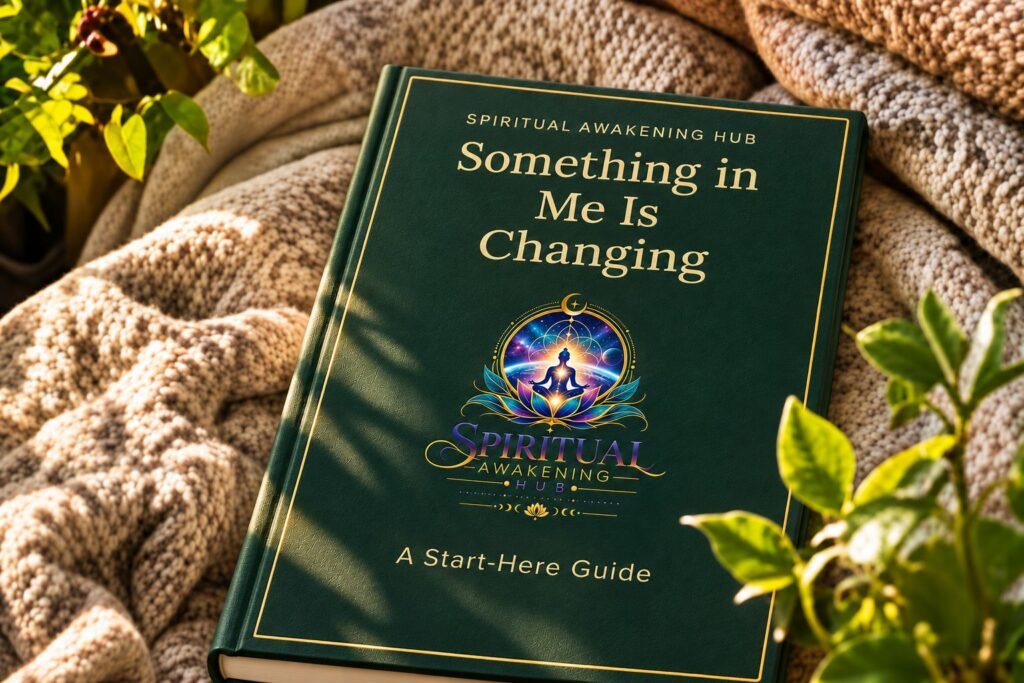
FEATURED GUIDE
You do not have to understand everything today.
Start with one question, one article or one grounding practice. The journey becomes clearer through attention, not urgency.
Not sure where to begin?
The SAH assessment offers a starting point based on what you are experiencing and what would help most.