

Mysteries & Alternative Beliefs
You’ve Had a Near-Death Experience Story Wrong: What NDE Researchers Actually Found Across Thousands of Cases
You’ve Had a Near-Death Experience Story Wrong: What NDE Researchers
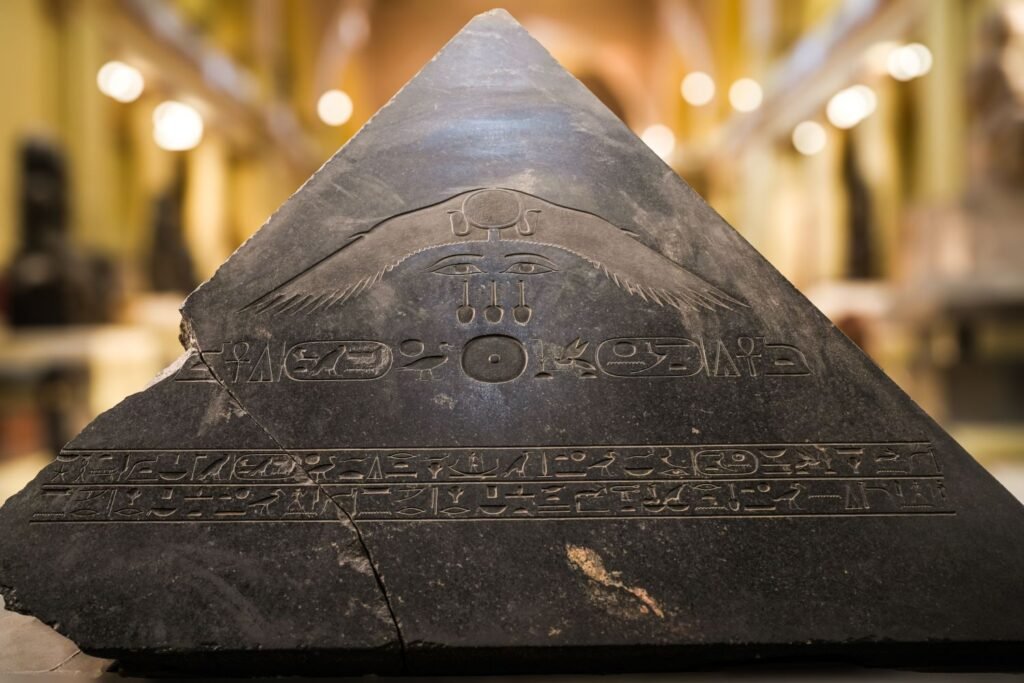
The 7 Hermetic principles aren’t ancient Egyptian doctrine. Discover The Kybalion’s 1908 origins, historical Hermeticism, and what came later.
You have probably seen the graphic.
A pyramid in the background. Gold lettering. Maybe an Eye of Horus for atmospheric insurance.
Across the image appear the 7 Hermetic principles:
Mentalism. Correspondence. Vibration. Polarity. Rhythm. Cause and Effect. Gender.
The caption explains that these are ancient laws passed down from the mystery schools of Egypt, preserved through initiates for thousands of years, and finally revealed to the modern world.
There is only one awkward problem.
The seven-principle system as we know it comes from The Kybalion, a book first published in Chicago in 1908.
That does not mean Hermeticism itself was invented in Chicago.
Far from it.
There really are ancient writings attributed to Hermes Trismegistus. They really did emerge from the extraordinary cultural meeting ground of Greek and Egyptian religion and philosophy. They influenced medieval thinkers, Renaissance philosophers, alchemists, occultists, and eventually many currents of modern Western esotericism.
But the story is far more interesting than “seven secret Egyptian laws survived unchanged for millennia.”
By the end of this investigation, you’ll be able to separate at least three things that spiritual websites routinely blend together: ancient Hermetic literature, later Hermetic and alchemical traditions, and the distinctly modern teachings of The Kybalion.
You may still value all three.
You just won’t have to pretend they are the same thing.
Begin with something surprisingly easy to forget:
There is no single ancient book called “Hermeticism.”
Instead, scholars use terms such as the Hermetica for a broad collection of writings attributed to the legendary figure Hermes Trismegistus.
These texts are not all about the same subjects.
Some concern astrology, magic, alchemy, medicine, and related technical arts. Scholars often call these the technical Hermetica.
Others are religious-philosophical dialogues exploring God, cosmos, mind, soul, knowledge, rebirth, humanity’s place in creation, and spiritual transformation. These are commonly called the philosophical Hermetica.
The best-known philosophical collection is the Corpus Hermeticum, generally associated with the first centuries of the Common Era, alongside texts such as the Asclepius and surviving Hermetic fragments. Cambridge’s Handbook of Western Mysticism and Esotericism describes the Corpus Hermeticum as a collection of seventeen treatises from roughly the second and third centuries CE.
Already, this presents a very different picture from the one circulating in quote graphics.
Historical Hermeticism was not a tidy seven-step doctrine.
It was a varied religious, philosophical, magical, astrological, and cosmological literature that developed across centuries.
And its central figure was every bit as fascinating as the texts attributed to him.
Hermes Trismegistus—“Hermes the Thrice-Great”—was not simply an Egyptian philosopher whose biography historians somehow misplaced.
He is a legendary composite figure connected with the Greek god Hermes and the Egyptian god Thoth.
Thoth was associated with writing, wisdom, knowledge, calculation, and magic. Greeks encountering Egyptian religion identified him with Hermes, their own divine messenger and patron of certain forms of knowledge.
Over time, Hermes Trismegistus emerged as an imagined supreme sage and revealer of sacred wisdom.
The Oxford Classical Dictionary describes him as a Hellenistic Hermes “Egyptianized through contact with the Egyptian Thoth,” while also noting that surviving Hermetic writings exist in Greek, Latin, and Coptic and cover philosophical as well as astrological, alchemical, and magical subjects.
That matters because there are two opposite historical mistakes we can make.
The first says:
“Hermeticism is pure ancient Egyptian wisdom passed down intact from the pharaohs.”
The second overcorrects:
“There is nothing Egyptian about it; it’s just Greek philosophy wearing Egyptian cosplay.”
Neither captures the complexity.
Recent scholarship has increasingly taken the Egyptian setting of the Hermetica seriously.
The writings are deeply shaped by the intellectual language of the Hellenistic and Roman Mediterranean—especially Greek philosophical traditions such as Platonism.
But that does not erase Egypt.
The newest Cambridge scholarship on the Hermetica describes the writings as deeply Hellenic in language and form while emphasizing that Hermes remained unmistakably Egyptian and that the literature retained Egyptian roots and local color.
Some Hermetic dialogues feature figures such as Isis, Horus, Tat, Ammon, and Hermes. Egyptian religious themes and cultural settings are not accidental decoration.
This is what makes phrases such as Greco-Egyptian Hermeticism useful.
The texts developed within a world where cultures were meeting, translating, borrowing, arguing, and recombining.
Ancient Alexandria and Roman Egypt were not sealed cultural containers.
They were crossroads.
So yes—Egypt belongs in the history.
But acknowledging Egyptian influence is very different from claiming that every teaching subsequently labeled “Hermetic” came from pyramid-era mystery schools.
That leap is precisely where history starts getting replaced by mythology.
This is the distinction worth highlighting in bold.
Ancient Hermeticism is real. The claim that ancient Hermeticism consisted of the seven principles listed in The Kybalion is the problem.
Open the Corpus Hermeticum and you do not find an introductory chapter explaining:
That sevenfold sequence appears in The Kybalion.
The book itself announces these as “The Seven Hermetic Principles” and builds its teaching around them. The original 1908 text lists precisely those seven principles.
The older Hermetica certainly contain ideas that can resemble parts of this framework.
Mind matters enormously.
Cosmic relationships matter.
Generation matters.
The relationship between divine and earthly realities matters.
Patterns, cycles, transformation, and causation appear in various forms.
But resemblance is not identity.
If an ancient text discusses the importance of mind, that does not mean it taught The Kybalion’s “Principle of Mentalism.”
If an old cosmology discusses male and female generation, that does not mean its authors secretly subscribed to The Kybalion’s seventh law.
Historical traditions do not work like software packages waiting thousands of years for someone to finally reveal their menu screen.
Ironically, The Kybalion is not the first chapter in Hermetic history to involve confusion about age.
Renaissance Europe made its own spectacular chronological error.
In the fifteenth century, manuscripts of the Corpus Hermeticum reached Florence, where Marsilio Ficino translated them into Latin at the request of Cosimo de’ Medici.
Ficino completed his influential translation in 1463.
The Hermetic writings became enormously important in Renaissance philosophical and esoteric circles because many thinkers believed Hermes Trismegistus was an extraordinarily ancient sage—perhaps even older than Moses.
In other words, Renaissance readers thought they were encountering primeval theology.
They weren’t.
In 1614, classical scholar Isaac Casaubon famously used linguistic and historical evidence to challenge that ancient dating, placing the Hermetic writings in the post-Christian Greco-Roman world rather than the remote antiquity Renaissance enthusiasts imagined.
Casaubon did not prove that the Hermetica were worthless.
He changed their address in history.
And this distinction is worth remembering because it mirrors our modern problem.
Correcting the date of a text does not automatically destroy its philosophical value.
It simply stops us from making historical claims the evidence cannot support.
Jump forward roughly three centuries.
Not to Alexandria.
To the United States during the explosive growth of metaphysical religion, occult publishing, mental-healing movements, and New Thought.
In 1908, the Yogi Publication Society in Chicago released a small book titled:
The Kybalion: A Study of the Hermetic Philosophy of Ancient Egypt and Greece.
Its authors were identified mysteriously as “Three Initiates.”
The book presents itself as communicating Hermetic teaching and repeatedly invokes Hermes Trismegistus.
But its style feels strikingly different from ancient Hermetic dialogues.
It speaks in crisp universal principles.
It discusses mental transmutation.
It emphasizes mastery of one’s mental states.
It talks about vibration, polarity, planes, mental gender, causation, and the ability of the adept to work knowingly with universal laws.
The result is elegant.
Memorable.
Highly teachable.
And remarkably compatible with the metaphysical currents thriving in America at the beginning of the twentieth century.
That compatibility is not incidental.
The identity of the “Three Initiates” generated decades of speculation.
Several names have been proposed.
But the strongest modern scholarly case identifies William Walker Atkinson, a prolific American writer associated with New Thought, as the principal—and likely sole—author.
Religious-studies scholar Philip Deslippe investigated the question in detail for the 2011 “Definitive Edition” of The Kybalion. Penguin Random House describes his historical introduction as establishing Atkinson’s authorship and places the work squarely within the world of New Thought and modern occultism.
Atkinson was extraordinarily prolific.
He wrote on mental power, personal magnetism, thought force, concentration, occult psychology, New Thought, and related topics, sometimes under pseudonyms.
Once you place The Kybalion beside that environment, some of its supposed ancientness begins to look considerably more modern.
This doesn’t prove that every sentence was invented from nothing in 1908.
Atkinson was drawing from older esoteric currents.
But synthesis is different from transmission.
A DJ can sample a seventeenth-century composition.
That does not make the resulting track seventeenth-century music.
For anyone encountering the subject for the first time, The Kybalion’s system is:
Mentalism — reality is fundamentally mental; “The All” is mind.
Correspondence — patterns correspond across different levels or planes of existence.
Vibration — everything moves or vibrates; differences are interpreted as differences of vibration.
Polarity — apparent opposites are understood as different degrees of the same underlying thing.
Rhythm — phenomena move through recurring swings, cycles, advances, and retreats.
Cause and Effect — events arise through causes rather than sheer accident.
Gender — masculine and feminine principles are said to operate throughout reality, including beyond biological sex.
As a metaphysical framework, it is impressively compact.
That compactness probably explains part of its success.
Seven principles fit neatly in a chapter.
And, several generations later, very neatly in an infographic.
The historical question, however, is not whether these ideas are interesting.
It is whether this particular seven-part system was a doctrine taught by ancient Hermetic writers.
The evidence says no.
“The All is Mind; the Universe is Mental” may be The Kybalion’s most famous statement.
Ancient philosophical Hermetica absolutely give enormous importance to nous—mind or intellect.
In Corpus Hermeticum XII, for example, mind is described in intimate relation to the divine, and other Hermetic texts explore divine intellect, human intellect, cosmic order, and spiritual awakening through knowledge.
So calling mentalism completely unrelated to older Hermetic thought would be unfair.
But the equation:
Ancient Hermetica discuss divine mind → therefore they taught The Kybalion’s Principle of Mentalism
is too easy.
The older writings contain their own cosmologies and theological distinctions.
They do not organize them under The Kybalion’s seven-principle framework.
Think family resemblance, not identical doctrine.
This is where things get particularly interesting.
The phrase most people associate with Hermeticism is:
“As above, so below.”
And unlike “everything vibrates,” this saying really does have a substantial pre-modern Hermetic pedigree.
But its famous source is not the Corpus Hermeticum.
It comes from the Emerald Tablet, a short alchemical-Hermetic work attributed to Hermes Trismegistus.
The earliest surviving versions are found in the Arabic intellectual world, with the best-known early witness appearing in a work generally dated around the eighth or ninth century CE. The text later entered Latin Europe and became enormously influential in Western alchemy.
That is ancient or medieval depending on which historical periodization you’re using—but it is certainly not evidence of a pharaonic seven-principle curriculum.
And again, there was no list saying:
Principle Two: Correspondence.
The Kybalion takes an older Hermetic motif and turns it into part of a systematic modern schema.
This may be appropriation in the neutral historical sense: receiving old material and reshaping it.
Traditions do this constantly.
“Everything vibrates” sounds timeless partly because modern readers have heard the word vibration so often that it feels almost primordial.
High vibration.
Low vibration.
Raise your vibration.
Energy vibrates.
Thought vibrates.
But vocabulary has histories.
The Kybalion’s treatment of vibration sits comfortably beside nineteenth- and early twentieth-century metaphysical attempts to blend spiritual claims with the language of energy, matter, frequency, mental influence, and emerging popular science.
Ancient Hermetic texts certainly discuss motion, cosmos, transformation, soul, and changing states.
Corpus Hermeticum XI, for instance, speaks about cosmos, time, becoming, recurrence, increase, and decrease.
But that is not the same as discovering The Kybalion’s Principle of Vibration hidden in antiquity.
An ancient writer discussing movement did not necessarily mean what a 1908 occult author meant by “vibration.”
Words can sound alike while carrying very different intellectual machinery underneath.
Opposites are hardly a modern invention.
Ancient Greek philosophy, Egyptian cosmology, Indian traditions, Chinese philosophy, and countless other systems wrestled with pairs such as:
light and darkness,
life and death,
hot and cold,
male and female,
unity and multiplicity.
So it would be absurd to claim that polarity suddenly appeared in Chicago in 1908.
What appears modern is The Kybalion’s specific formulation of polarity as one of seven universal Hermetic laws, together with the technique of mentally transmuting one pole toward another.
Older Hermetic writings contain contrasts and transformations.
But again, they do not announce a canonical “Principle of Polarity.”
This distinction may feel pedantic until you apply the same logic elsewhere.
Shakespeare wrote about jealousy.
That does not mean Shakespeare invented modern attachment theory.
Shared themes do not automatically imply shared systems.
The cosmos of the ancient Mediterranean was deeply rhythmic.
Celestial movement, birth, death, seasonal patterns, generation, decay, and recurrence were fundamental features of philosophical and religious reflection.
Hermetic texts are no exception.
That gives The Kybalion’s Principle of Rhythm genuine conceptual relatives.
But “there are cycles in ancient Hermetic thought” is a much safer statement than:
“Ancient Egyptian Hermetic masters taught the Fifth Hermetic Principle of Rhythm.”
The first statement reflects comparison.
The second invents a lineage.
And much of the confusion around the Hermetic principles comes from sliding unconsciously between those two forms of language.
Cause and effect is even trickier.
Ancient philosophers spent enormous energy thinking about causation, fate, necessity, providence, chance, and cosmic order.
So yes, causal thinking appears throughout ancient philosophy.
But causation is hardly a uniquely Hermetic discovery.
Calling cause and effect one of the seven secret Hermetic laws is The Kybalion’s organizational move.
It is not evidence that historical Hermetic schools carried around an identical numbered curriculum.
Sometimes a principle is so broad that finding parallels everywhere tells us very little about historical transmission.
“Things have causes” is one of those cases.
The seventh principle often produces the most modern confusion.
Ancient cosmologies frequently use masculine and feminine symbolism.
Generation, fertility, divine pairs, and sexual imagery were deeply embedded in Mediterranean religion.
Hermetic literature participates in that wider world.
But The Kybalion makes a specific metaphysical claim: that gender operates on all planes, including the mental and spiritual, and that masculine and feminine principles participate universally in creation.
That formulation belongs to The Kybalion’s own system.
It should not be casually projected backward into ancient Egypt as though priests in the New Kingdom were teaching “mental gender” exactly as the 1908 text describes it.
They weren’t reading The Kybalion.
Neither were the authors of the Corpus Hermeticum.
History occasionally benefits from stating the obvious.
It is not an ancient Egyptian manuscript.
No archaeologist excavated it from a temple wall, tomb, papyrus cache, or hidden chamber beneath the Sphinx.
It was published in 1908.
It is not part of the classical Corpus Hermeticum.
The Corpus Hermeticum consists of ancient philosophical-religious treatises attributed to Hermes. The Kybalion is a modern work written many centuries later.
It is not evidence that ancient Hermeticism consisted of seven universal laws.
The list belongs to The Kybalion.
And it is not therefore automatically worthless.
That final point matters.
Because myth-busting can become just as intellectually lazy as myth-making.
This is the wrong question.
A text can be historically misrepresented and still be spiritually influential.
A teaching can be modern and still contain insight.
A book can creatively reinterpret an older tradition without being an archaeological artifact of that tradition.
The problem begins when categories collapse.
Suppose someone says:
“The Kybalion is a fascinating twentieth-century synthesis of Hermetic motifs, New Thought, mental metaphysics, and occult philosophy.”
That is historically defensible.
Suppose instead they say:
“These seven laws were taught in Egyptian mystery schools thousands of years ago and secretly transmitted unchanged until 1908.”
Now we have moved from spiritual interpretation into a historical claim.
And historical claims require evidence.
The distinction does not diminish spirituality.
It makes spirituality more intellectually adult.
A teaching does not become deeper merely because we move its publication date backward by three thousand years.
This is where the story becomes less about Hermeticism and more about us.
“Published in Chicago in 1908” does not sound quite as impressive as:
“Encoded by ancient Egyptian initiates.”
One evokes a printing press.
The other evokes torch-lit temples.
We know which one looks better on Instagram.
But underneath the aesthetics is a deeper psychological habit.
Modern spiritual culture often uses age as a substitute for authority.
Ancient means pure.
Ancient means tested.
Ancient means uncontaminated by modern confusion.
Ancient means somebody knew something we have forgotten.
Sometimes ancient traditions do preserve extraordinary insight.
But old ideas can also be wrong.
Modern ideas can also be profound.
And many living traditions are neither purely ancient nor purely modern. They are layered organisms shaped by reinterpretation, translation, conflict, innovation, borrowing, and rediscovery.
The desire for pristine transmission often tells us more about our hunger for certainty than about the historical record.
Actual intellectual history is messy.
The web prefers:
Ancient Egypt → Hermes → Seven Principles → You.
Easy.
Elegant.
Wrong.
The real story looks more like:
Egyptian religion meets Greek interpretation.
Hermes and Thoth become intertwined.
Various writings appear under the authority of Hermes Trismegistus.
Philosophical, magical, astrological, and alchemical traditions develop.
Texts travel.
Arabic scholars preserve, translate, expand, and transform Hermetic and alchemical material.
Medieval Europeans receive some of it.
Renaissance thinkers rediscover the Corpus Hermeticum and mistakenly believe it is far older than it is.
Scholars correct that dating.
Occult revivals reinterpret Hermeticism again.
New Thought emerges.
William Walker Atkinson writes prolifically about mind and metaphysical power.
The Kybalion appears.
Twentieth-century occultists and later New Age culture absorb it.
Social media eventually turns the entire history back into seven bullet points.
Messier.
But much more interesting.
There is a temptation in spirituality to imagine that real traditions descend vertically.
Pure teaching above.
Human receiver below.
History is mostly inconvenient interference.
But traditions are built horizontally too.
People interpret.
Translate.
Misunderstand.
Improve.
Borrow.
Forget.
Invent.
Recover.
Argue.
Canonize one book and neglect another.
The historical Hermetic tradition is a spectacular example.
The figure of Hermes Trismegistus himself emerges from cultural fusion.
The philosophical Hermetica blend multiple intellectual environments.
Arabic and medieval traditions reshape Hermetic material.
Renaissance philosophers reinterpret it again.
Modern occultists do the same.
The Kybalion belongs to this history of reception and reinvention.
That does not make it fraudulent by definition.
It makes it human.
And perhaps the more difficult spiritual lesson is realizing that wisdom does not become contaminated simply because human beings participated in producing it.
There may never have been a pristine vault where “the real Hermetic teaching” sat untouched.
Tradition is often the conversation.
If this history has made you curious rather than disappointed, good.
Start closer to the sources.
Read some of the Corpus Hermeticum rather than only modern summaries of “Hermetic laws.”
The first treatise, often called Poimandres, is an obvious entry point.
Then explore texts concerned with mind, knowledge, rebirth, and humanity’s relationship with the divine, including Corpus Hermeticum X, XI, XII, and XIII.
Read the Asclepius.
Notice immediately how different these works feel from The Kybalion.
They are stranger.
Less systematized.
More theological.
Sometimes contradictory.
Occasionally frustrating.
They do not behave like a modern personal-development manual.
Brian Copenhaver’s scholarly translation of the Greek Corpus Hermeticum and Latin Asclepius remains a major academic resource, while newer scholarship such as M. David Litwa’s work continues refining our understanding of the broader Hermetic corpus.
Then read The Kybalion.
But read it as a 1908 text.
Something interesting happens when you do.
It becomes easier to hear its actual voice.
Whenever you encounter an allegedly ancient spiritual teaching online, ask four questions.
What is the earliest text in which this exact teaching appears?
Not a vaguely similar concept.
The actual formulation.
What language was that text written in?
Translations often smuggle modern assumptions into ancient words.
When is the surviving text dated?
“Attributed to an ancient sage” and “written by that sage” are not the same statement.
Does a scholar of the historical tradition recognize the claim?
This does not mean scholars possess spiritual infallibility.
It means archaeology, philology, manuscript studies, and historical research matter when someone makes archaeological, linguistic, manuscript, or historical claims.
Use different tools for different questions.
Meditation may tell you whether an idea transforms your inner life.
Meditation cannot carbon-date a manuscript.
Perhaps you practice polarity and find it psychologically useful.
Keep exploring it.
Perhaps correspondence gives you a meaningful way to think about patterns between microcosm and macrocosm.
Study that.
Perhaps mentalism changed your relationship with thought.
Excellent.
Perhaps the idea of rhythm helped you stop panicking every time life moved into a difficult season.
None of that requires saying:
“Ancient Egyptians taught these exact seven laws.”
You can simply say:
“These are the seven principles presented in The Kybalion, an influential modern Hermetic text published in 1908.”
One sentence.
History repaired.
Spiritual life unharmed.
This is a useful habit far beyond Hermeticism.
We do not need to destroy practices when their origin stories become more complicated.
Sometimes we simply need better labels.
There is something strangely freeing about discovering that a beloved teaching is younger than you thought.
At first it can feel like losing enchantment.
Then a different kind of wonder appears.
You begin asking better questions.
Why did a New Thought writer in early twentieth-century America find Hermes so compelling?
Why were people still reaching toward Egypt, Greece, alchemy, and ancient wisdom during an era of electricity, industrialization, psychology, and radical scientific change?
Why did The Kybalion’s language of vibration and mind feel so persuasive then?
Why does it feel persuasive now?
How does every generation remake “ancient wisdom” in the image of its own anxieties?
Suddenly The Kybalion becomes more interesting, not less.
It is no longer a mysterious package dropped untouched from antiquity.
It becomes a window into the way spiritual traditions evolve.
There is a wonderful irony here.
Hermeticism became famous partly because generations of readers believed Hermes represented primordial wisdom.
But the historical tradition itself is evidence of transformation.
Egyptian and Greek worlds meet.
Gods merge.
Languages change.
Texts migrate.
Meanings shift.
Arabic thinkers receive and reshape material.
Latin translators carry it onward.
Renaissance philosophers revive it.
Modern occultists reinterpret it.
Then The Kybalion reorganizes parts of that inheritance for a new age.
Perhaps the history of Hermeticism is not a story about guarding perfectly unchanged secrets.
Perhaps it is a story about what happens when human beings repeatedly encounter mystery and attempt to give it language.
That doesn’t excuse bad history.
Quite the opposite.
It gives us a reason to respect each layer enough to call it by its own name.
This may be the hardest myth to relinquish.
We like chronological shortcuts.
Ancient = profound.
Modern = commercial.
Traditional = authentic.
New = corrupted.
History is rarely so cooperative.
The Corpus Hermeticum is ancient.
That does not mean you must believe every cosmological claim inside it.
The Kybalion is modern.
That does not mean every psychological observation inside it is useless.
Truth is not awarded according to publication date.
The date answers one question:
When did this idea, in this form, appear?
Whether the idea is philosophically coherent, spiritually fruitful, psychologically useful, metaphorically rich, scientifically credible, or ethically wise requires other questions.
Confusing these categories is where both believers and skeptics get into trouble.
A historical correction cannot by itself settle a metaphysical question.
But spiritual conviction cannot settle a historical one either.
We need enough intellectual humility to let both be true.
So what are the 7 Hermetic principles?
They are the organizing framework of The Kybalion, an enormously influential twentieth-century metaphysical work drawing upon Hermetic language and themes while also reflecting the New Thought and occult environment in which it appeared.
They are not a seven-item syllabus found in the Corpus Hermeticum.
They are not known to be teachings carved into ancient Egyptian temples.
They were not recovered from a pharaonic papyrus.
And The Kybalion is not itself an ancient Hermetic document.
Historical Hermeticism is older, stranger, messier, more diverse, and in many ways more fascinating than the simplified version.
It gives us Hermes and Thoth.
Greek philosophy and Egyptian religion.
Cosmology.
Divine mind.
Spiritual rebirth.
Astrology.
Alchemy.
Magic.
Theology.
Centuries of translation and reinterpretation.
The story does not become smaller when the myth falls away.
It becomes larger.
And maybe that is the better relationship with ancient wisdom.
Not believing every dramatic origin story because we want it to be true.
Not sneering at everything spiritual because one origin story turned out to be exaggerated.
But learning to say:
This part is ancient.
This part is medieval.
This part is Renaissance.
This part is modern.
And now that I know the difference, I can actually explore what each one has to say.
That is not disenchantment.
It is discernment.
And any wisdom tradition worth studying should be able to survive it.
There is a peculiar kind of respect involved in refusing to make a tradition older, purer, or simpler than the evidence allows.
Hermeticism does not need invented antiquity to be fascinating.
Nor does The Kybalion need to have been written beside the Nile three thousand years ago to deserve a place in the history of modern spirituality.
They simply deserve different labels.
If this article leaves you curious, the most rewarding next step is to read The Kybalion beside several selections from the Corpus Hermeticum. Do not rush to decide which is “better.”
Notice the differences.
Notice the vocabulary.
Notice what each text believes spiritual transformation actually requires.
The distance between them may teach you as much as either book alone.
You’ve Had a Near-Death Experience Story Wrong: What NDE Researchers

Manifestation vs. Goal Setting: Are They Really Different? Manifestation vs. goal setting:

The Coincidences We Remember—and the Thousands We Don’t Why do

Why Some Coincidences Feel Deeply Meaningful Why do some coincidences

The Wisdom Tradition Wars: Why Comparing Buddhism to Christianity Almost

What Monks Don’t Tell You About Enlightenment (Because It’s Not