
Sacred Geometry: Ancient Spiritual Insight, Mathematical Pattern — or Modern Projection?
What is sacred geometry, really? The real history behind the Flower of Life, Metatron’s Cube, and Fibonacci — separated from modern myth.
Table of Contents
- The tattoo shop wall and the cathedral ceiling
- What this piece will actually give you
- What sacred geometry actually means, in plain language
- What it’s NOT
- What’s genuinely, documentably ancient
- Where the modern mythology starts — and where it departs from history
- Is the Flower of Life actually an ancient Egyptian symbol?
- The honest, harder truth: pattern-recognition isn’t the same as proof of design
- How to actually engage with sacred geometry, either way
- Closing: the pattern was never the point
- Author’s note
The tattoo shop wall and the cathedral ceiling
Somewhere right now, someone is choosing a tattoo off a shop wall — a perfect circle woven through with overlapping circles, gold and symmetrical, captioned “Flower of Life: the blueprint of creation, found in every ancient culture on Earth.”
Six thousand miles away, in a cathedral built eight hundred years ago, a stonemason’s rose window does something remarkably similar — repeating geometric patterns, radiating outward, engineered with a level of mathematical precision that still holds up structurally today.
One of these is real, documented, and datable to the year. The other is a pattern that genuinely does show up across history — just not for the reasons, or with the ancient pedigree, that the tattoo shop caption claims. Untangling which is which is not a matter of debunking mystery for its own sake. It’s actually more interesting than either the myth or a flat dismissal of it — because what’s actually true about sacred geometry is stranger, older, and more mathematically real than the Instagram version, and also considerably less sweeping than the Instagram version claims.
This piece is for anyone who’s ever looked at one of these patterns and felt something, and also wanted to know what’s actually verifiable underneath the feeling.
What This Piece Will Actually Give You
By the end of this article, you’ll understand what “sacred geometry” actually refers to — a real body of mathematical and architectural practice with genuine historical and spiritual weight, across multiple civilizations — and you’ll be able to clearly separate that documented history from the newer esoteric claims built on top of it, including the specific, checkable story behind symbols like the Flower of Life and Metatron’s Cube, and what’s actually true about Fibonacci patterns in nature.
This isn’t a debunking piece, and it isn’t an uncritical celebration either. It’s the piece that lets you hold both the real history and the real mystery, without confusing one for the other.
What Sacred Geometry Actually Means, in Plain Language
At its most basic, “sacred geometry” refers to the belief, held across a wide range of cultures and eras, that certain mathematical proportions, shapes, and patterns carry symbolic, cosmological, or spiritual significance — not just aesthetic value, but meaning tied to the structure of the universe, the divine, or the nature of existence itself.
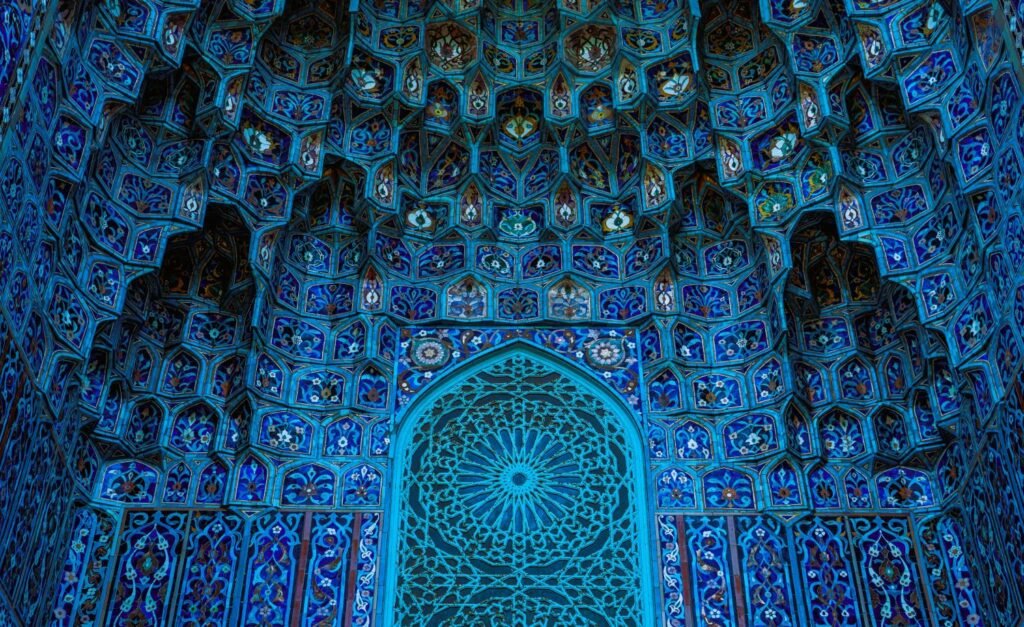
This isn’t a fringe modern invention as a general concept. Ancient Greek philosophers, particularly in the Pythagorean and Platonic traditions, treated mathematics and geometry as a genuine path to understanding ultimate reality — Plato’s philosophical work assigns specific geometric solids (now called the Platonic solids) symbolic correspondence with the fundamental elements. Islamic architectural tradition developed extraordinarily sophisticated geometric patterns, executed with real mathematical rigor, as a central mode of religious and artistic expression, in part because figurative religious imagery is traditionally restricted in Islamic sacred art, making abstract geometric pattern a primary vehicle for expressing the infinite and the divine. Gothic cathedral architects encoded specific proportional systems into their structures, some tied to numerological or theological symbolism understood within their own tradition. Hindu and Buddhist traditions developed mandalas and yantras — geometrically precise, symbolically dense diagrams used in meditation and ritual, discussed at more length in this site’s guide to mandalas.
So “sacred geometry” as a general phenomenon — the idea that geometric pattern carries spiritual weight — is genuinely ancient, genuinely cross-cultural, and genuinely well-documented. What gets murkier, and what this piece is going to carefully sort through, is the far more specific set of modern claims about particular symbols (the Flower of Life especially) being direct, unbroken continuations of that ancient tradition, discovered rather than invented, and universally present across civilizations that had no contact with each other.
What It’s NOT
Before going further, some important corrections to how this topic usually gets presented — in both overselling and underselling directions.
- It’s not a single, unified tradition. Greek Platonic geometry, Islamic geometric art, Gothic cathedral proportion, and Hindu yantra design are genuinely distinct traditions, developed independently, for different theological and cultural reasons. Treating “sacred geometry” as one continuous global lineage erases real, specific history in favor of a vaguer, more marketable story.
- It’s not evidence of a single “ancient global civilization” with lost, shared cosmic knowledge, a claim that circulates widely in popular sacred geometry content but has no serious support in mainstream archaeology or history. Similar geometric patterns showing up independently across cultures is far more plausibly explained by the shared mathematical properties of geometry itself — certain patterns are elegant, stable, and naturally arise from simple compass-and-straightedge construction, which any sufficiently developed culture with basic tools could and did discover on its own.
- It’s not the same claim as “these patterns are mathematically real,” which is true and interesting on its own terms, versus “these patterns were spiritually intended by ancient builders in the specific way modern interpreters describe,” which is a separate, much less certain claim requiring actual textual or archaeological evidence specific to each case.
- It’s not inherently fraudulent or silly to find these patterns spiritually meaningful today, regardless of their specific historical pedigree. A pattern can be a genuinely modern spiritual practice, meaningful in its own right, without needing an invented ancient Egyptian backstory to justify that meaning — a distinction this piece will return to directly.
What’s Genuinely, Documentably Ancient
Let’s start with the real history, because it’s substantial and doesn’t need any embellishment to be impressive.
The golden ratio and Greek mathematics. The golden ratio (approximately 1.618, often denoted by the Greek letter phi) is a real, well-defined mathematical proportion, studied rigorously since antiquity — Euclid’s Elements, a foundational mathematical text from around 300 BCE, defines and works with this exact proportion. It shows up in classical Greek architecture and art in some documented instances, and its mathematical properties (related to certain natural growth patterns and specific geometric constructions) are genuinely elegant and well-understood by mathematicians today.
Fibonacci numbers and natural pattern. The Fibonacci sequence (0, 1, 1, 2, 3, 5, 8, 13, and so on, where each number is the sum of the two before it) was described in the West by the Italian mathematician Fibonacci in the 13th century, though equivalent number sequences were independently studied earlier in Indian mathematics, including in the context of Sanskrit poetic meter. The ratio between successive Fibonacci numbers converges toward the golden ratio as the sequence progresses — a genuine, checkable mathematical fact. Certain natural growth patterns — the spiral arrangement of seeds in a sunflower head, the branching patterns of some plants, the chambered growth of certain nautilus shells — approximate Fibonacci-related spirals, because this kind of proportional growth is an efficient solution to certain packing and growth problems that evolution arrives at repeatedly and independently, not because of any encoded cosmic intention.
Islamic geometric art. This is one of the most sophisticated, mathematically rigorous applications of geometric pattern in religious art anywhere in history. Islamic artisans and mathematicians, particularly from the 9th century onward, developed complex tessellating patterns — repeating geometric designs that tile a surface without gaps — using techniques that in some cases anticipated mathematical concepts (including certain principles later associated with what mathematicians now call quasicrystalline geometry) that weren’t formally described in Western mathematics until centuries later. This tradition is extensively documented, with a clear, traceable history across specific regions, dynasties, and named architectural monuments.
Gothic cathedral architecture. Medieval master masons used proportional systems — some derived from geometric constructions, some tied to specific numerological or theological symbolism meaningful within Christian tradition at the time — as actual structural and design tools, not merely decorative afterthought. The precise geometric relationships in cathedral floor plans, window tracery, and vaulting have been studied extensively by architectural historians, with real documentary and physical evidence supporting their intentional use.
Hindu and Buddhist yantras and mandalas. These are geometrically precise, ritually significant diagrams with real, traceable textual history within their respective traditions, used in meditation, ritual, and temple architecture, discussed at greater length in this site’s dedicated guide to mandalas — that piece is worth reading alongside this one if this specific tradition interests you.
Every single one of these is real, well-documented history — no exaggeration required. That’s worth sitting with before moving into the murkier territory, because the modern mythology around sacred geometry often works by borrowing the genuine credibility of this real history and stretching it to cover claims this history doesn’t actually support.
Where the Modern Mythology Starts — and Where It Departs From History
Here’s where the story gets more complicated, and where careful, honest sorting actually matters.
Beginning particularly in the 20th century, a body of popular esoteric literature — most influentially associated with the New Age movement, and significantly shaped by specific 20th-century authors and teachers — began constructing a broader narrative: that a specific, identifiable set of geometric symbols (the Flower of Life, Metatron’s Cube, the Seed of Life, and related figures) represent a single, universal, ancient “sacred code” underlying all of reality, found identically across radically disparate ancient cultures with no contact with each other, and only recently “rediscovered” by modern spiritual teachers.
This narrative borrows real elements — the genuine historical richness described above — but makes a specific, much larger and considerably less supported claim on top of them: that these particular modern symbol-sets specifically are direct continuations of a single, ancient, shared spiritual science, rather than modern compositions that draw on real geometric principles while constructing a new mythology around their origin and meaning.
Is the Flower of Life Actually an Ancient Egyptian Symbol?
This is one of the most widely repeated claims in sacred geometry content, and it deserves a direct, careful answer, because the actual history is more interesting than the myth and also considerably less sweeping.
The Flower of Life pattern — a design of multiple evenly-spaced, overlapping circles forming a flower-like pattern — is geometrically simple to construct with nothing more than a compass, and versions of overlapping-circle patterns do appear in various decorative and architectural contexts across different historical periods and locations, including some genuinely ancient sites. The specific claim that circulates widely — that a particular, fully-elaborated version of this design appears carved at the Temple of Osiris at Abydos, Egypt, and represents definitive proof of a specific, deliberate, ancient use of this exact sacred symbol — is more contested than popular sacred geometry content generally acknowledges. Some Egyptologists and researchers examining the specific markings in question have raised significant questions about their dating and origin, including whether some of the markings are considerably more recent than the ancient temple structure itself, potentially added or altered well after the original construction. This is a genuinely disputed area rather than a settled one in either direction, and readers researching this specific claim should look for sources that engage with the dating controversy directly, rather than sources that simply assert the ancient Egyptian origin as established fact.
What can be said with more confidence: overlapping-circle geometric patterns are simple enough to construct that they plausibly arose independently in multiple times and places, for decorative, mathematical, or symbolic reasons specific to each context — which is a different, more modest, and more historically defensible claim than “this exact named symbol, with this exact modern meaning, was a single shared ancient global code.”
Metatron’s Cube — a geometric figure derived from the Flower of Life pattern, said in popular esoteric literature to contain within it all five Platonic solids and to relate to the archangel Metatron — is, as far as documentable history shows, a considerably more recent construction, primarily associated with 20th-century esoteric and New Age literature rather than ancient textual or archaeological sources. This doesn’t make it meaningless as a modern symbol — plenty of genuinely resonant spiritual symbols are modern inventions, discussed further below — but it does mean the specific claim of ancient pedigree attached to it doesn’t hold up under scrutiny.
The Honest, Harder Truth
Here’s what most content on this topic gets wrong, in one direction or the other: the human brain is extraordinarily good at finding meaningful pattern, which is exactly why “this pattern shows up everywhere” is weaker evidence of cosmic design than it feels like in the moment.
This is worth taking seriously as a real cognitive phenomenon, not a dismissive gotcha. Humans are pattern-recognition machines by evolutionary necessity — a trait that served our ancestors well for spotting predators and edible plants, but which also reliably produces false positives, seeing meaningful design in patterns that arise from much simpler, non-intentional processes. Geometric shapes like circles, hexagons, and certain spirals appear frequently in nature and human construction not because they encode a hidden cosmic message, but because they are, in a very literal mathematical sense, efficient — the most stable, least resource-intensive solutions to common structural and growth problems, which is exactly why unrelated systems (a beehive, a snowflake, a Gothic rose window, a sunflower) independently arrive at similar geometric solutions without needing a shared ancient source teaching them to.
This matters because “found across many cultures, therefore ancient shared cosmic knowledge” and “found across many cultures, because it’s a mathematically efficient and visually compelling pattern that any sufficiently curious culture with basic tools can independently discover” are two very different explanations for the exact same observed evidence — and popular sacred geometry content almost always defaults to the first explanation without seriously engaging the second, considerably better-supported one.
There’s a second, harder truth worth stating plainly: claiming a symbol is ancient when the documented historical record doesn’t clearly support that claim isn’t a harmless embellishment — it’s a real erasure of the actual, specific, fascinating history each tradition has in favor of a vaguer, more marketable myth. Islamic geometric art has its own extraordinary fourteen-century-plus history, developed by named mathematicians and artisans, in service of a specific theological tradition. Flattening it into an undifferentiated instance of one “universal sacred geometry code,” alongside a modern 20th-century construction like Metatron’s Cube, actually diminishes the specificity of what Islamic geometric artisans actually accomplished, in service of a story that isn’t accurate to begin with.
And a third, perhaps more surprising truth: none of this means engaging with the Flower of Life or Metatron’s Cube as a modern spiritual practice is illegitimate. A symbol doesn’t need a verifiable five-thousand-year pedigree to hold real meaning for the person meditating on it today. The issue isn’t that these symbols are used spiritually — it’s specifically the invented historical claims wrapped around them, which are checkable, and which don’t hold up, and which aren’t actually necessary for the symbol to still be worth engaging with honestly, as the modern practice it actually is.
How to Actually Engage With Sacred Geometry, Either Way
Whether you’re drawn to this topic as a skeptic, a spiritual practitioner, or both, here’s how to engage with it honestly.
If a specific historical claim matters to you, check it against documented sources rather than repeated captions. “Found at Abydos” or “used by ancient Egyptians” are checkable claims — look for sources that engage with the actual archaeological dating controversy, not sources that simply assert the claim as settled. The same standard applies to any “used by [ancient culture]” claim attached to a symbol.
Separate the mathematics from the mythology, and appreciate each on its own terms. The golden ratio is real math, genuinely elegant, worth understanding for its own sake, independent of any claim about ancient civilizations encoding it deliberately into every corner of existence. You can find the mathematics itself genuinely beautiful without needing an inflated mythology to justify that appreciation.
If you use these symbols meditatively or artistically, engage with them as the modern practice they actually are. There’s nothing lesser about a spiritual practice built around a 20th-century symbol, used sincerely today, compared to one with a longer documented history — but honesty about which one you’re engaging in matters, both for your own clarity and for the traditions (like Islamic geometric art or Hindu yantra practice) whose specific, real history deserves to be represented accurately rather than folded into an undifferentiated ancient-mystery narrative that was never actually theirs to begin with.
When you notice a striking pattern in nature or architecture, let both possible explanations sit together rather than rushing to the more dramatic one. “This is mathematically elegant and efficient, which is why it recurs” and “this feels spiritually significant to me” are not mutually exclusive claims — you can hold the real mathematics and the real felt sense of meaning at the same time, without needing the second to be proof of the first.
The Pattern Was Never the Point
Here’s the reframe worth keeping: the actual, documented history of humans finding spiritual and mathematical significance in geometric pattern — across Greek philosophy, Islamic art, Gothic architecture, Hindu ritual design — is genuinely remarkable enough on its own. It doesn’t need a fabricated ancient global conspiracy of shared cosmic knowledge to be worth your attention. If anything, the invented version is a smaller, flatter story than the real one — it trades away the specific, textured history of several extraordinary independent traditions for one vague, unverifiable myth that erases the very cultures it claims to honor.
The real story is this: geometry is one of the oldest languages humans have used to reach for something larger than themselves — not because the shapes were handed down from a lost civilization, but because pattern, proportion, and structure are genuinely, independently compelling to the human mind, everywhere it has ever encountered them. That’s not a lesser kind of magic. It might be a more durable one.
If this piece leaves you wanting to go deeper into any one thread — Islamic geometric art, Gothic cathedral design, the mathematics of the golden ratio, or the specific meditative use of mandalas and yantras within their own living traditions — that’s exactly where the real richness of this topic actually lives, well past what any single overview article can cover.
Author’s note: I went into this piece expecting to end up mostly debunking the Flower of Life mythology, and I came out of it more impressed by the real history than I expected to be — Islamic geometric art in particular deserved a much bigger place in this piece than sacred geometry content usually gives it. I think that’s the actual lesson here: the true version of this story didn’t need my skepticism or anyone’s mysticism to be worth telling. It just needed someone to tell it accurately.
Related Articles
Awakening
Dark Night of the Soul
The Dark Night of the Soul: 13 Signs You’re in It—and What Actually Helps When your old identity, meaning, and
August 15, 2026
No Comments

Consciousness
Why Mystical Experiences Can Feel “More Real Than Real”—Without Proving What They Mean
Why Mystical Experiences Can Feel “More Real Than Real”—Without Proving What They Mean Why do mystical experiences feel more real
September 8, 2026
No Comments
Wisdom
Sacred Geometry: Ancient Spiritual Insight, Mathematical Pattern — or Modern Projection?
Sacred Geometry: Ancient Spiritual Insight, Mathematical Pattern — or Modern Projection? What is sacred geometry, really? The real history behind
September 9, 2026
No Comments

WellBeing
Holistic Wellbeing for Skeptics: What’s Actually Evidence-Based—and What Deserves More Questioning
Holistic Wellbeing for Skeptics: What’s Actually Evidence-Based—and What Deserves More Questioning Is holistic medicine evidence based? We examine meditation, yoga,
September 1, 2026
No Comments

Personal Transformation
What If You Don’t Have One Life Purpose
Related Video 1 Videos What If You Don’t Have One Life Purpose? The Problem With Searching for “What You Were
September 12, 2026
No Comments

WellBeing
Why Your Spiritual Practice Can’t Replace Sleep: The Overlooked Foundation of Higher Wellbeing
Why Your Spiritual Practice Can’t Replace Sleep: The Overlooked Foundation of Higher Wellbeing Meditation can’t fix what sleep deprivation breaks.
September 10, 2026
No Comments