

Personal Transformation
What If You Don’t Have One Life Purpose
Related Video 1 Videos What If You Don’t Have One Life Purpose? The Problem With Searching for “What You Were
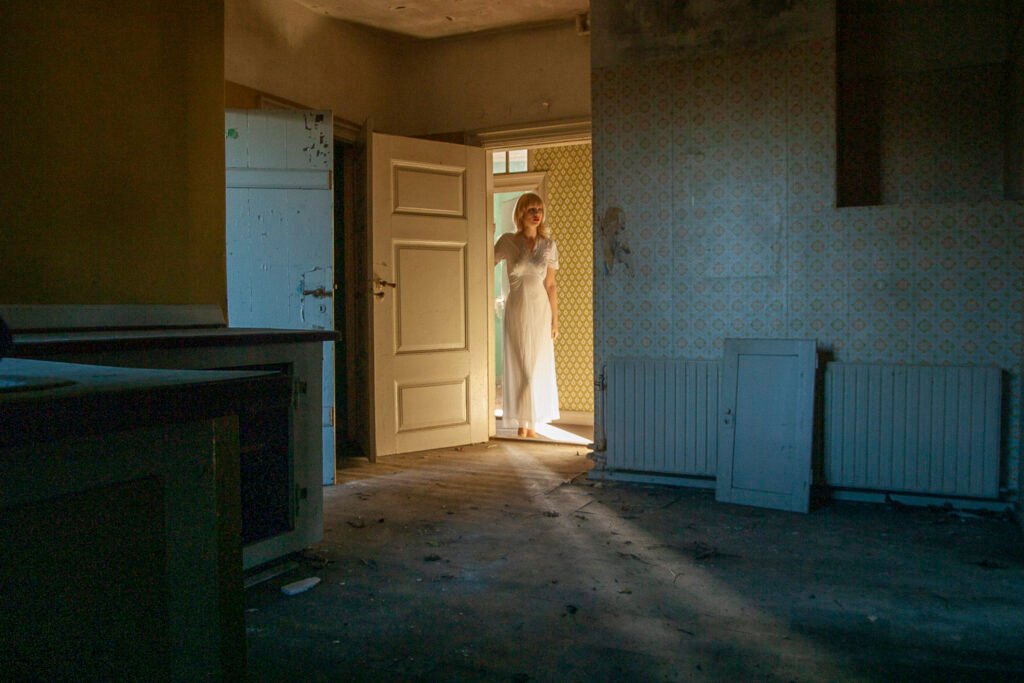
What happens when old beliefs stop working? Explore spiritual deconstruction, identity change, doubt, grief, meaning reconstruction, and rebuilding without rushing.
You hear the familiar explanation.
You have heard it perhaps a hundred times.
Once it made the world feel ordered.
Today something in you quietly says:
I don’t believe that anymore.
Not dramatically.
No thunder.
No mystical revelation.
Just a tiny internal separation between the words you are hearing and the person who used to accept them.
That distance can become terrifying.
Because beliefs rarely live in the mind as isolated propositions.
They attach themselves to:
family
identity
morality
community
ritual
memory
hope
death
purpose
So when a belief stops working, you may not simply lose an answer.
You may lose the architecture that told you where you were standing.
This can happen to someone leaving a religion.
It can happen to someone who remains religious but changes how they understand it.
It can happen to a New Age seeker who stops believing every synchronicity is cosmic guidance.
Or an atheist who experiences something that disrupts their certainty.
Belief change belongs to everyone.
Consider:
“There is life after death.”
That statement might function as an intellectual belief.
But it may also contain:
hope about your mother
fear about your own mortality
childhood memories
funeral rituals
community membership
moral expectations
Change the proposition and all those connected systems move.
This is why people sometimes say:
“I don’t understand why this is affecting me so much.”
Because the belief was doing more work than you knew.
It can mean several things.
You no longer think it is true.
You still think it may be true but it no longer makes emotional sense.
The belief conflicts with new evidence.
The moral consequences begin troubling you.
Your personal experience no longer fits the framework.
The authority structure supporting it has lost credibility.
Or perhaps the belief once helped you grow but now seems too small for what you’ve encountered.
Beliefs can stop working intellectually.
Emotionally.
Socially.
Morally.
Spiritually.
Those changes do not always occur together.
This catches many people off guard.
You intellectually reject a teaching about divine punishment.
Yet doing something previously forbidden still produces fear.
You no longer believe questioning is sinful.
Yet doubt triggers guilt.
You stop believing particular supernatural threats.
Yet darkness still activates old images.
Research on people who deidentify from religion has found evidence of religious residue—previous religious identification can continue influencing cognition, emotion, and behaviour after affiliation changes.
This makes intuitive sense.
Ideas learned repeatedly—especially in emotionally powerful environments—do not vanish merely because you edited your conscious worldview.
Sometimes your philosophy changes faster than your nervous system.
The term deconstruction now gets used broadly for critically examining inherited religious or spiritual beliefs.
Strictly speaking, this popular usage differs from philosophical deconstruction associated with thinkers such as Jacques Derrida.
In everyday spiritual language, however, people generally mean:
taking beliefs apart to see what they are made of.
Where did this idea come from?
Who taught it?
What evidence supports it?
What moral assumptions does it carry?
What happens if I stop believing it?
This process can produce liberation.
It can also produce grief.
Sometimes both before lunch.
Certainty is psychologically expensive to lose.
Yesterday you knew:
why you’re here
what happens after death
what is right
what the universe wants
which practices work
who your community is
Today:
maybe.
The mind dislikes uncertainty because uncertainty keeps questions open.
And open questions consume energy.
This is why simplistic explanations become especially attractive during transitions.
Someone appears and says:
“I have the answer.”
Relief can masquerade as evidence.
Imagine you have said:
“I am Christian.”
or:
“I am Buddhist.”
or:
“I am spiritual.”
for twenty years.
That label may organize friendships, routines, morality, aesthetics, family expectations, and your understanding of yourself.
Remove it.
What replaces the sentence?
Research on religious deconversion increasingly treats departure as a complex biographical and psychological process rather than simply a one-time intellectual switch. A 2021 review noted the importance of values, attachment, socialization, development, personality, and cultural context in understanding deconversion.
Changing belief can therefore become identity reconstruction.
Not just opinion change.
Sometimes the hardest part is not God.
It is Sunday dinner.
The meditation group.
The festivals.
Friends.
Shared jokes.
People who understand your vocabulary.
Belonging.
You may discover that disagreement alters relationships you assumed were unconditional.
Or perhaps nobody rejects you, but conversations simply feel different.
Belief communities provide social infrastructure.
Leaving an idea can unintentionally mean leaving a world.
When an external authority supplied clear moral rules, ambiguity could be outsourced.
Now you face questions yourself.
What makes something right?
Tradition?
Consequences?
Character?
Compassion?
Human flourishing?
Reason?
Divine command?
This can initially feel like moral collapse.
It does not have to become one.
But building an examined ethical framework requires more effort than inheriting one.
Freedom includes paperwork.
Perhaps the deepest loss concerns narrative.
Why am I here?
Is suffering meaningful?
Does history have direction?
Will justice ultimately prevail?
Does death end the story?
Not all belief systems answer these questions.
But many do.
When the cosmic story disappears, existence can briefly feel flatter.
This is often mistaken for evidence that you should return immediately to the old belief.
Not necessarily.
It may simply mean you are experiencing narrative withdrawal.
Research paints a more varied picture than either religious warnings or secular triumph stories suggest.
A large longitudinal study published in 2024 followed roughly 20,000 Dutch adults across multiple waves and examined conversion and deconversion from Christianity.
Religious beliefs and practices declined around deconversion, as expected. But the researchers found no corresponding overall change in wellbeing, and personality changes were generally small.
This is important.
Leaving religion does not automatically destroy wellbeing.
Nor does it automatically improve everything.
Individual experiences vary enormously.
Another qualitative study of former fundamentalists found that early identity reconstruction could be difficult, while for participants in that study the development of a nonreligious identity later contributed to improved self-concepts and wellbeing.
There is no universal deconstruction script.
This page should make room for that too.
Questioning does not necessarily end in departure.
A Christian may reconstruct faith differently.
A Buddhist may rethink reincarnation while retaining practice.
A spiritual seeker may stop believing in “manifestation” while remaining interested in mysticism.
An atheist may question materialism without converting to a religion.
Belief development is not always:
faith → doubt → unbelief.
Sometimes it is:
certainty → complexity.
That may be the more interesting journey.
Humans tolerate old certainty.
We tolerate new certainty.
The transition between them is harder.
There may be a period when you cannot honestly say:
I believe.
But also cannot say:
I don’t.
You exist between frameworks.
This is sometimes described as liminality—a threshold condition.
The old room has been left.
The new room is not furnished.
You may interpret this as failure.
But perhaps this is where actual examination becomes possible.
This is one of the most common traps.
You leave a rigid religion.
Two months later you encounter another system that explains everything:
astrology
manifestation
a guru
conspiracy spirituality
a different religion
a totalizing psychological framework
The vocabulary changed.
The structure did not.
Same certainty.
Same authority dynamics.
Same fear of doubt.
Different furniture.
Ask:
Am I choosing this because it is convincing—or because uncertainty hurts?
That question can save years.
Mortality.
Injustice.
Suffering.
Randomness.
Loss.
Meaning.
Once certainty disappears, these questions become exposed.
There may be no replacement explanation that produces the same comfort.
This is one of spiritual growth’s least marketable truths:
A more honest worldview may initially feel less comforting than the worldview it replaces.
Truth and psychological convenience do not have a contract.
Deconstruction often focuses so heavily on what must go that people forget inheritance can contain good things.
Maybe you no longer accept the theology.
But you still value:
ritual
community service
silence
music
forgiveness
hospitality
weekly rest
contemplation
gratitude
You are allowed to examine each piece individually.
Rejecting a literal belief does not require burning every practice associated with it.
Likewise, retaining a practice does not oblige you to pretend belief in something you no longer accept.
Take an old teaching and ask:
Do I believe this is factually true?
Then:
Did this teaching cultivate something valuable?
Different questions.
For example, perhaps you no longer believe a ritual literally changes supernatural reality.
Yet participating connects you to family, grief, memory, and gratitude.
The ritual may still matter.
Meaning can outlive literalism.
Start smaller than “What is the purpose of existence?”
That question has ruined many perfectly good afternoons.
Ask:
What do I care about?
Who do I want to become?
What kind of relationships make life worth inhabiting?
What suffering can I reduce?
What experiences produce awe?
What commitments survive uncertainty?
Meaning can be built from lived commitments before metaphysical certainty arrives.
Divide a page into four columns.
WHAT I USED TO BELIEVE
Write the idea plainly.
WHAT I BELIEVE NOW
“I don’t know” is allowed.
WHAT I STILL VALUE
Perhaps compassion, ritual, community, reverence.
WHAT I WANT TO INVESTIGATE
Books.
History.
Research.
Other traditions.
Your experience.
This prevents deconstruction from becoming a vague cloud of doubt.
You can see the actual terrain.
During belief change, seek people capable of hearing uncertainty without immediately trying to solve it.
Not:
“Come back.”
Not:
“Congratulations, now you’re one of us.”
Someone who can say:
“Tell me what you’re thinking.”
That kind of relationship is rare.
And profoundly useful.
If family members remain committed to your former beliefs, they may experience your change personally.
They may fear for you.
Feel rejected.
Interpret disagreement as betrayal.
You cannot control their reaction.
But you can communicate clearly:
“I’m not asking you to stop believing. I’m asking for room to be honest about where I am.”
Sometimes relationships adapt.
Sometimes they don’t.
That grief deserves acknowledgment.
This matters.
People sometimes leave a belief system and begin mocking the person they used to be.
But your former beliefs probably served understandable needs.
Belonging.
Meaning.
Love.
Hope.
Structure.
Perhaps you accepted them because people you trusted taught them.
Perhaps the evidence looked different from inside the system.
Treating your former self with contempt makes genuine integration harder.
You do not need to hate who you were to change who you are.
Then you may build a life without one totalizing worldview.
Perhaps you become comfortable holding:
some scientific naturalism
some contemplative practice
some religious symbolism
some philosophical uncertainty
some mystery
This can look messy compared with comprehensive systems.
It may also be honest.
Not everything needs to fit under one roof.
At first, questioning feels like demolition.
Later, another possibility appears.
You become harder to manipulate.
More comfortable with complexity.
Less threatened by disagreement.
More interested in what people actually mean.
Less likely to confuse authority with truth.
You discover that uncertainty does not prevent ethics.
Or love.
Or wonder.
Or commitment.
Maybe old beliefs stopped working because you failed.
Or maybe they stopped working because your questions became larger than the answers they were built to contain.
You do not have to rush.
Let the questions mature.
Sometimes a worldview is not rebuilt by finding the next perfect answer.
It is rebuilt by becoming someone who no longer needs every answer to arrive at once.
If you’re deciding how to evaluate new ideas as old ones fall away, continue with How to Question a Spiritual Claim Without Becoming Cynical. And if you’re wondering whether old stories can retain value even after literal belief changes, read Can Something Be Meaningful Without Being Literally True?
Changing your mind can feel like changing your life because sometimes it is. Be wary of anyone who demands that your uncertainty resolve on their timetable. Honest belief is allowed to take time.
Related Video 1 Videos What If You Don’t Have One Life Purpose? The Problem With Searching for “What You Were

What Chronic Overstimulation Feels Like: 12 Signs Your Brain Has Had Too Much Input Feeling wired, foggy, irritable or unable

Can You Be Aware Without Thinking? What “Pure Consciousness” Is Supposed to Mean Can consciousness exist without thought? A grounded

What Is a Spiritual Awakening? Explore the signs, symptoms, stages, challenges, and grounded ways to navigate a profound inner shift.

What Happens When Your Old Beliefs Stop Working? What happens when old beliefs stop working? Explore spiritual deconstruction, identity

Manifestation Journaling: 7 Methods That Turn Vague Desires Into Clear Intentions Try seven manifestation journaling methods for clearer goals, better