
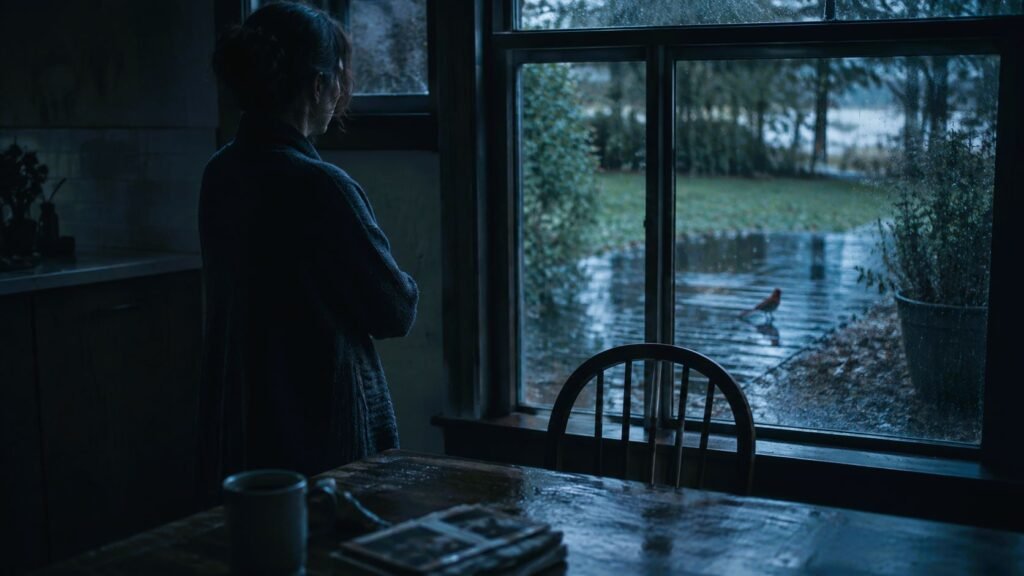
When Someone Dies and You Start Seeing “Signs”: Grief, Coincidence—or Something We Don’t Understand?
Seeing signs after someone dies can feel deeply real. Explore grief, visitation dreams, sensed presence, coincidence, continuing bonds, and what we can know.
Table of Contents
- The Strange Things That Happen After Someone Dies
- What People Mean by “Signs From Deceased Loved Ones”
- What These Experiences Are Not
- Why Grief Can Make the World Feel Unusually Charged
- Visitation Dreams: Why Some Dreams Feel Different
- Feeling the Presence of Someone Who Died
- Songs, Animals, Objects, and Impossible Timing
- Continuing Bonds: Why Love Does Not Simply Switch Off
- Grief Psychology vs. Spiritual Interpretation
- The Harder Truth: We Cannot Verify Every Meaningful Experience
- A Seven-Question Framework for Interpreting a “Sign”
- When These Experiences Become Distressing
- Can a Relationship Continue Without Proving Contact?
- What If You Never Get a Sign?
- A More Honest Way to Hold the Mystery
The Strange Things That Happen After Someone Dies
A few weeks after her father died, a woman I once heard describe her grief said she was driving home when his favorite song came on the radio.
Not remarkable by itself.
Except she had spent the previous ten minutes crying in the car, asking out loud, “Are you still here somehow?”
Then the song started.
She pulled over.
For the rest of the evening, she felt something she had not felt since the funeral.
Not certainty.
Not exactly.
More like company.
And almost immediately, another part of her mind began dismantling it.
The station plays that song all the time.
You were thinking about him, so of course it felt important.
You’re grieving. You’re looking for things.
Then came the question beneath all the other questions:
But what if it really was him?
This is the uncomfortable territory of signs from deceased loved ones.
It is easy to write about badly.
One extreme tells grieving people that every flickering light, cardinal, butterfly and repeated number is unquestionably communication from “the other side.”
The other responds to deeply personal experiences with a shrug: coincidence, cognitive bias, moving on.
Neither approach is especially humane.
Grief can produce vivid dreams, powerful coincidences, sensed presences and moments of startling recognition. Psychology has meaningful ways of understanding many of these experiences. Research also shows they are not particularly rare and are not automatically evidence of mental illness.
What psychology cannot currently do is examine a particular song, dream or moment of presence and tell you whether a deceased person somehow caused it.
That leaves us in a difficult—but surprisingly fertile—middle ground.
The experience may be real.
The meaning may be profound.
The cause may remain unknown.
What People Mean by “Signs From Deceased Loved Ones”
When someone searches “signs a deceased loved one is near,” they may be referring to very different experiences.
Some people dream of the person who died and wake with an unusual feeling that they genuinely visited rather than merely appeared in a dream.
Some smell a familiar perfume or cigarette smoke in an empty room.
Some briefly hear their loved one’s voice.
Others experience no sensory event at all. They simply feel, with startling immediacy:
They’re here.
Then there are symbolic experiences.
A bird appears repeatedly.
A specific song plays at an uncanny moment.
An object falls from a shelf.
A clock stops.
A phrase the deceased used appears in an unexpected place.
A coincidence unfolds with such precision that calling it “random” feels emotionally inadequate.
Researchers use various terms for some of these experiences, including sensed presence, sensory or quasi-sensory experiences of the deceased, post-bereavement experiences, and—in some research—bereavement hallucinations. Importantly, the word hallucination in this literature does not automatically mean psychosis or pathology; it can simply describe an experience of perception without an identifiable external stimulus.
Large reviews suggest these kinds of experiences are common in bereavement. Estimates vary substantially depending on how researchers define and ask about them, but some studies have found sensory or quasi-sensory experiences in a large proportion of bereaved people.
In other words:
If something like this has happened to you, you are not necessarily experiencing something bizarre.
You are experiencing something human.
What remains open is how to interpret it.
What These Experiences Are Not
Before asking what a sign might mean, several assumptions are worth clearing away.
They are not automatic proof of an afterlife
A vivid experience can feel completely convincing and still not tell us its ultimate cause.
A person may sincerely feel their late husband standing beside the bed.
That experience deserves respect.
But personal certainty and scientific verification are different things.
At present, bereavement research can investigate that people have these experiences, how frequently they occur, how they affect grief, and what psychological processes may contribute.
It cannot establish from the experience alone that consciousness survives bodily death.
They are not automatically “just grief” either
The phrase just grief is strange when you think about it.
Grief reorganizes memory, attention, identity, attachment, expectation and the way a familiar world feels.
There is nothing “just” about that.
A psychological explanation does not necessarily make an experience meaningless.
They are not necessarily a sign that something is wrong with you
Research reviews emphasize that sensed-presence and related experiences during bereavement are often benign and should not automatically be treated as symptoms of psychiatric illness.
Context matters enormously.
A comforting sense of your mother beside you while making her old recipe is very different from frightening voices, severe confusion or experiences that prevent you from functioning.
And they are not a competition
Some people see signs everywhere.
Others never experience one.
Neither tells you how deeply someone loved the person who died.
Grief does not issue spiritual merit badges.
Why Grief Can Make the World Feel Unusually Charged
To understand why signs can feel so real, begin with something simple:
Your brain does not immediately understand absence.
Imagine living with someone for thirty years.
You know the rhythm of their steps.
The cough from the next room.
The way the front door sounds when they return.
The coffee cup they always use.
The time they usually call.
Your mind has spent decades predicting them.
Then they die.
Biologically, intellectually, you may know this.
But the networks built around expecting that person do not disappear after the funeral.
This helps explain one of grief’s strangest experiences: turning because you thought you heard them come through the door.
For half a second, the old world returns.
Then the new one does.
Recent theoretical work on sensed presence after bereavement examines exactly this collision between deeply learned representations of a person and the reality of their absence.
Grief also changes attention.
Anything connected to the person becomes highly salient.
Their name jumps off a page.
Their favorite song seems louder.
A stranger wearing their perfume can stop you in your tracks.
This does not mean you fabricated the event.
It means your attention is carrying a map of what matters.
And after loss, that map has one enormous landmark missing from the physical world.
Why Do “Visitation Dreams” Feel So Different?
Ask people who believe they have experienced a visitation dream, and many will make an immediate distinction.
“It wasn’t like my normal dreams.”
They may describe unusual clarity.
The deceased appears healthy.
There is often little narrative chaos.
Sometimes very few words are spoken.
The person may simply smile, embrace them or say some version of:
I’m okay.
Then the dream ends.
And the emotional residue can last for years.
Dreams of deceased loved ones are common enough to have attracted substantial research attention. In one survey of 278 bereaved people, 58% reported dreams of the person who died, and many described the dreams as emotionally meaningful.
Psychologically, dreams provide one place where the mind can continue working with an attachment relationship after the person’s physical absence. Research on grief dreams has examined how memories, familiar people and loss-related mental representations are reorganized during sleep.
But dreams are also interpreted through culture.
A dream in one community may be understood as memory processing.
In another, as literal visitation.
In another, as communication requiring ritual response.
Studies of Cambodian bereavement, for example, show that dreams of the dead can carry highly specific religious and cultural meanings—and that their emotional effect can be comforting or deeply distressing depending on what the dream is believed to signify.
So what was your dream?
Memory?
Attachment?
The sleeping brain reconstructing someone you miss?
A spiritual encounter?
Science can meaningfully investigate the first three possibilities.
It currently cannot verify the fourth from the dream itself.
You are allowed to leave that sentence unfinished.
Feeling the Presence of Someone Who Died
Perhaps even more striking than dreaming is the experience of someone who has died feeling physically near while you are awake.
You may be washing dishes and suddenly feel your partner standing behind you.
You may sit in your mother’s chair and experience a strong impression that she is beside you.
Some people hear a familiar voice.
Others smell a distinctive scent.
Many simply describe presence.
No image.
No sound.
Just an almost spatial knowing:
He’s in the room.
Historically, one well-known study of widowed people found that nearly half reported some form of experience involving their deceased spouse, with a sensed presence among the most common forms. Later research has continued to find that such experiences are widespread and often meaningful rather than automatically pathological.
This matters because people often hide these experiences.
They fear being laughed at.
Or diagnosed.
Or told they’re unable to “let go.”
Yet modern bereavement psychology has moved considerably beyond the old assumption that healthy grieving requires severing the internal relationship completely.
Which brings us to one of the most important shifts in grief theory.
Continuing Bonds: Love Does Not Obey the Funeral Schedule
For much of the twentieth century, influential models of grief emphasized detachment.
The grieving person was expected, in one form or another, to withdraw emotional investment from the dead and reinvest in the living.
Eventually, researchers and clinicians began noticing an obvious problem.
People don’t actually grieve that way.
A daughter still asks herself what her father would advise.
A widower continues wearing his wedding ring.
A mother talks to her dead child while gardening.
Someone prepares a grandmother’s recipe every Christmas and hears her commentary internally while doing it.
These relationships change.
They do not necessarily vanish.
This helped produce the modern concept of continuing bonds: the idea that adapting to loss can include maintaining an internal, symbolic or emotional relationship with the person who died rather than erasing them from one’s life.
That bond might include memories.
Values.
Ritual.
Conversation.
Dreams.
Keepsakes.
A sense of presence.
Even adopting something the person taught you and carrying it forward.
This is important because it gives us another way to understand signs.
Maybe the cardinal matters not because we can prove your mother dispatched a cardinal.
Maybe it matters because the bird has become part of the language through which your ongoing relationship with your mother is experienced.
That isn’t necessarily a lesser meaning.
Songs, Animals, Objects—and Impossible Timing
Not every sign involves sensing the person directly.
Often it is the timing that shakes you.
You are standing in a hardware store missing your brother when the obscure song you played at his funeral begins overhead.
You ask your late partner for reassurance, step outside, and encounter the species of bird they adored.
You find a long-lost note inside a book on the anniversary of someone’s death.
The psychology here is relatively straightforward up to a point.
Grief heightens attention to anything associated with the person.
Memory creates powerful networks of association.
Coincidences occur.
And because emotionally significant events are easier to remember than non-events, startling matches accumulate in memory while thousands of ordinary mismatches disappear.
But there is a mistake skeptics sometimes make here.
Explaining why you were more likely to notice the song does not explain why the song played at that particular moment.
Probability may explain that coincidences eventually happen.
It does not prevent a coincidence from feeling astonishing when it happens to you.
This is where humility is useful on both sides.
“Statistically possible” is not the same as “emotionally insignificant.”
And “emotionally extraordinary” is not the same as “paranormally proven.”
Both statements can be true at once.
What About Animals?
Birds may be the unofficial ambassadors of bereavement.
Cardinals.
Robins.
Hummingbirds.
Butterflies too, despite their regrettable lack of bird credentials.
Many families develop an association between a deceased loved one and a particular animal.
Sometimes that symbolism existed before the death.
Sometimes it begins afterward.
An animal behaving unusually can feel especially powerful because living creatures seem agentic. They look at us. Approach us. Move unexpectedly.
But ordinary explanations remain available.
Animals have habitats, migration patterns, feeding behaviors and seasonal cycles.
Human attention is selective.
And a person who has just begun watching for cardinals will notice far more cardinals than they did previously.
Does that invalidate the experience?
Not necessarily.
A symbol can become sacred through relationship even if nature did not violate its own rules to produce it.
You might hold the encounter like this:
“I cannot know whether this was sent. But it reminded me of him at exactly the moment I needed to remember.”
That is a strong statement.
It does not need inflation.
Objects, Lights, Clocks, and Technology
This is where interpretations can get particularly enthusiastic.
A lamp flickers.
A song begins playing unexpectedly.
A clock stops.
A photograph falls.
A phone produces an old memory notification.
Immediately:
They’re trying to contact me.
Perhaps that interpretation feels right to you.
But ordinary causes become especially important when physical systems are involved.
Lightbulbs fail.
Electrical connections flicker.
Algorithms resurface photographs.
Old batteries behave badly.
Objects fall.
Technology is already sufficiently haunted without requiring the dead.
The useful principle is simple:
Check the ordinary explanation before declaring an extraordinary one.
Not because mystery must be defeated.
Because a meaningful experience does not become more meaningful by refusing to inspect a loose plug.
Grief Psychology vs. Spiritual Interpretation
The phrase “psychological explanation” often sounds threatening to people who experienced a sign.
It shouldn’t.
Psychology can tell us a great deal about how experiences arise.
Attachment systems remain active.
Memory networks reactivate familiar representations.
Attention prioritizes emotionally relevant stimuli.
Dreaming recombines memory and emotion.
Expectation influences perception.
Culture influences interpretation.
None of this is controversial.
But notice what those explanations do not establish.
They do not prove:
“There is no afterlife.”
That conclusion exceeds the data too.
There is an important difference between saying:
“We know of psychological mechanisms that can contribute to this experience.”
and:
“Therefore we have proven that nothing beyond those mechanisms occurred.”
Science is strongest when it remains disciplined about that boundary.
So is spirituality.
The Harder Truth: We Cannot Verify Every Meaningful Experience
This may be the most emotionally difficult part of the subject.
You may never know.
Not in the clean, courtroom-evidence sense.
The dream may remain a dream that felt like more than a dream.
The song may remain impossibly well timed.
The presence you felt beside the bed may remain one of the most convincing moments of your life.
And still:
You may not be able to prove it.
That can feel unfair.
Especially when what you really want is not paranormal evidence.
You want the person.
You want one more ordinary morning.
One more voicemail.
One more badly timed joke.
One more argument you would now gladly lose.
Questions about signs are often grief wearing philosophical clothing.
“Was that really her?” sometimes means:
“Is our relationship truly over?”
“Was he there?” sometimes means:
“Has everything that made him him simply disappeared?”
No article can settle that.
And anyone who pretends certainty—religious, spiritual or skeptical—is offering more confidence than the evidence allows.
What we can say is that relationships often continue psychologically after death.
We carry people’s voices.
Values.
Gestures.
Humor.
Damage.
Love.
Advice.
Sometimes even their sentences inside our own.
Death ends interaction in the form we knew.
It does not erase influence.
How Should You Interpret a Sign?
When something happens that feels like communication from someone who died, resist the pressure to classify it immediately.
Use these seven questions instead:
- What literally happened? Describe the event before adding interpretation. “A robin landed on the chair while I was thinking about Dad” is cleaner than “Dad sent a robin.”
- Why is this symbol personally significant? Did the person love that bird, song, number or object? Or did you learn its supposed meaning online yesterday?
- How unusual was the event? Is the bird rare where you live? Does that radio station play the song regularly? Is the event genuinely specific or only loosely matched?
- What state was I in? Grief, exhaustion, longing and anniversary reactions can intensify perception and meaning. That does not invalidate the experience, but it is relevant context.
- What ordinary explanations are available? Check them without treating them as enemies.
- What remains meaningful even if the event was coincidental? Sometimes this is the richest question. What memory surfaced? What unfinished feeling? What value or relationship did the moment restore?
- What am I about to do because of this interpretation? Receiving a bird encounter as comfort is one thing. Making a major financial, medical or legal decision because you believe the dead instructed you through a bird is another.
Meaning can be held gently.
High-stakes decisions need stronger evidence.
When These Experiences Become Distressing
Most sensed-presence experiences associated with grief appear to be benign, and many are described as comforting.
But “common in grief” should never become an excuse to ignore serious distress.
Consider professional support if experiences are frightening, increasingly intrusive, associated with severe insomnia or confusion, or making it difficult to work, care for yourself or remain connected to everyday life.
The same is true if grief itself remains intensely disabling over time.
The American Psychiatric Association distinguishes prolonged grief disorder from ordinary grief partly by persistence, severity and significant impairment in functioning beyond culturally expected mourning patterns. In adults, the diagnostic timeframe requires at least 12 months after the death; the existence of that diagnosis does not mean ordinary grief should be placed on a stopwatch.
You do not need to give up a spiritual interpretation in order to seek psychological help.
A competent grief professional should be able to ask:
“What was that experience like for you?”
before deciding what it means.
Research reviews specifically recommend nonjudgmental exploration of these experiences rather than reflexively dismissing or pathologizing them.
Can a Relationship Continue Without Proving Contact?
This may be the question underneath the entire article.
And yes.
Absolutely.
A relationship can continue in changed form without requiring us to settle the metaphysics of death.
You may still talk to them.
You may keep their photograph near your desk.
You may ask yourself what they would think.
You may celebrate their birthday.
Tell stories.
Cook their food.
Finish something they began.
Visit the place where you were happiest together.
Laugh at something only they would have understood.
The continuing-bonds perspective recognizes that these are not necessarily failures to “move on.” They can be ways of integrating a person into a life that now has to continue without their physical presence.
The relationship changes address.
It moves partly into memory.
Identity.
Ritual.
Story.
Character.
Sometimes into mystery.
You do not need to decide whether the person can literally hear you before saying what you need to say.
What If You Never Get a Sign?
This deserves its own section because spiritual content often creates an unnecessary cruelty.
A grieving person reads:
10 Signs Your Loved One Is Trying to Contact You
They recognize none of them.
Now grief has acquired a new wound.
Why haven’t they contacted me?
Were we not close enough?
Did they move on?
Am I spiritually blocked?
Please do not do this to yourself.
There is no reliable evidence that receiving apparent signs measures the strength of a relationship.
Some people dream vividly.
Others rarely remember dreams.
Some people naturally notice patterns.
Others don’t.
Some find comfort in signs.
Others find them unsettling.
Some people’s cultural or religious framework makes these experiences easy to recognize.
Others would not label the same event a sign at all.
The absence of a butterfly is not the absence of love.
You do not need paranormal confirmation to establish that someone mattered.
Their impact is already evidence of that.
A Story Can Be True in More Than One Way
Imagine a woman sees a cardinal on the anniversary of her husband’s death.
She cries.
She experiences it as him saying hello.
A scientist might note that cardinals are common in her region and that anniversaries increase grief-related attention.
A therapist might see the bird as part of a continuing bond.
A theologian might interpret the event spiritually.
A statistician might call it an emotionally salient coincidence.
The woman may simply say:
“I don’t care what it was. It felt like him.”
These interpretations are not identical.
And we should not pretend they make the same factual claim.
But several can illuminate different dimensions of the same human event.
The scientific account asks:
What mechanisms could produce this experience?
The psychological account asks:
What role does the experience play in grief?
The spiritual account asks:
Could relationship or consciousness continue beyond what we understand?
The personal account asks:
What did that cardinal mean to me?
Trouble begins when one kind of answer claims authority over all the others.
A More Honest Way to Hold the Mystery
There is a temptation after loss to turn every unusual event into proof.
There is another temptation to protect ourselves from disappointment by refusing to let anything mean anything.
Neither is necessary.
You can say:
“I don’t know what caused that.”
And then:
“It meant something to me.”
Those sentences coexist beautifully.
Maybe your mother’s perfume in an empty hallway was a memory-perception triggered by grief.
Maybe the dream of your brother was the sleeping brain reconstructing an attachment figure.
Maybe the song was coincidence.
Maybe the presence beside your bed arose because a brain trained for decades to expect someone did not instantly stop expecting them.
Maybe reality contains dimensions of consciousness and relationship we do not yet understand.
The evidence does not currently allow us to move confidently from maybe to therefore.
But uncertainty does not make the experience worthless.
Grief is already a confrontation with the limits of control.
Perhaps we do not need to answer that confrontation by manufacturing certainty.
Perhaps we can become more capable of mystery.
Not gullible.
Not cynical.
Just willing to admit where knowledge ends.
If you see the bird, notice it.
If the song comes on, listen.
If you dream of them, write it down before the morning dissolves it.
If you feel their presence and it comforts you, you do not need to apologize.
You can examine ordinary explanations and still allow yourself to be moved.
And if nothing happens—no dream, no cardinal, no flickering light—you have not been forgotten.
Because whatever death is, whatever consciousness ultimately turns out to be, one fact is already undeniable:
This person entered your life.
They changed it.
Something of that relationship now exists in the way you remember, choose, speak, love, fear, laugh and carry the world.
Maybe that is psychology.
Maybe some people would call it spirit.
Maybe the most honest among us can admit there are places where the distinction remains unresolved.
The question after someone dies may never be only:
“Are they still here?”
Sometimes it becomes:
“How will what they gave me remain here through me?”
That is not proof of an afterlife.
But it is not nothing.
It is one of the ways love refuses to become past tense.
Continue Exploring
If experiences after bereavement have made you wonder how much meaning can reasonably be placed on coincidence, the natural companion to this article is Synchronicity or Just a Coincidence? How to Take Meaningful “Signs” Seriously Without Believing Everything Is a Message.
And if you find yourself unsure whether an inner feeling is guidance or fear, continue with Intuition or Anxiety? 9 Ways to Tell the Difference When Your Gut Is Trying to Tell You Something.
Neither guide asks you to abandon mystery.
They ask you to hold it carefully.
Author’s Note
Grief has a way of making philosophical questions personal.
“Does consciousness survive death?” sounds abstract until the person whose laugh you knew better than your own is suddenly gone.
Then the question changes.
You are no longer debating an idea.
You are wondering where someone went.
That deserves tenderness—and intellectual honesty.
I don’t think we honor grief by telling people every coincidence is a message. I don’t think we honor it by laughing at the experiences people cannot explain either.
Some things can remain unresolved without becoming meaningless.
Sometimes the most respectful answer is:
I don’t know what happened. But I understand why it mattered.
Related Articles

Consciousness
12 Levels of Consciousness Explained
12 Levels of Consciousness Explained—Without the Mystical Jargon What if consciousness isn’t something you either “have” or “don’t have”—but something
August 18, 2026
No Comments

WellBeing
Holistic Wellbeing for Skeptics: What’s Actually Evidence-Based—and What Deserves More Questioning
Holistic Wellbeing for Skeptics: What’s Actually Evidence-Based—and What Deserves More Questioning Is holistic medicine evidence based? We examine meditation, yoga,
September 1, 2026
No Comments

Meditation
When Meditation Stops Feeling Relaxing: Why a Deeper Practice Can Actually Feel Harder
When Meditation Stops Feeling Relaxing: Why a Deeper Practice Can Actually Feel Harder Meditation not relaxing anymore? Discover why deeper
September 3, 2026
No Comments

Meditation
What Does Deep Meditation Actually feel like
What Does Deep Meditation Actually Feel Like? 11 Experiences People Rarely Explain Deep meditation feels stranger, quieter, and more physical
August 19, 2026
No Comments

WellBeing
What Does It Actually Mean to Be Well? 8 Dimensions of Wellbeing Most People Never Measure
What Does It Actually Mean to Be Well? 8 Dimensions of Wellbeing Most People Never Measure What is holistic wellbeing?
September 1, 2026
No Comments
Mysteries & Alternative Beliefs
Sleep Paralysis Demons Look Remarkably Similar Across Every Culture on Earth — Here’s the Leading Theory Why
Sleep Paralysis Demons Look Remarkably Similar Across Every Culture on Earth — Here’s the Leading Theory Why Sleep paralysis visitors
September 10, 2026
No Comments